E-time | the software company


AI Chatbot and Ticketing Systems: optimizing Customer Support
AI Chatbots in ticket management systems: role and functionalities
The integration of AI chatbots into ticketing systems allows for optimizing the management of support requests by reducing response times and automating crucial tasks such as classification, assignment and prioritization.
Some of the most relevant capabilities include:
- Automatic ticket categorization;
- Semantic and customer sentiment analysis;
- Generation of predefined or dynamic responses.
Thanks to these features, many recurring requests can be handled autonomously, leaving human staff to focus on more complex cases and strategic decisions.
How the integration of AI chatbots in a ticketing system works
AI chatbots combine machine learning algorithms with Natural Language Processing (NLP) and next-generation language models (LLMs) to accurately interpret the content of support requests.
These solutions enable the system to understand natural language, identify user intent, and detect emotional state. A further step is represented by Retrieval-Augmented Generation (RAG), which expands the context for analysis and allows for the generation of more relevant and personalized responses.
A key aspect is the ability for continuous learning: by analyzing previous interactions, the AI progressively refines its responses, improving overall ticket management.
Why adopt AI chatbots in support systems
The implementation of AI chatbots within ticketing systems brings numerous operational and strategic advantages:
- Improved efficiency: reduced response times and faster resolution of requests.
- Support scalability: handling increasing volumes of tickets without proportionally increasing the number of agents.
- Team relief: automation of repetitive tasks, allowing staff to focus on more complex issues.
- Optimized customer experience: timely, personalized responses and always-available self-service options.
Moreover, AI enables actionable insights from the collected data, monitoring service performance, anticipating potential issues, and ensuring a proactive approach consistent with the brand identity.
From AI to real support: the integration of Margot in ticketing systems
The integration between Margot, the AI agent developed by E-time and Rexpondo, the ITSM ticketing system, simplifies and makes support request management more efficient.
One of Margot’s main tools is the AI chatbot, which analyzes incoming tickets, automatically suggests the most appropriate classification and provides immediate, contextualized responses based on the company’s knowledge base.
Thanks to continuous learning, the agent constantly improves response accuracy, ensuring scalable, personalized and consistent support across all communication channels.
Discover the solutions offered by E-time
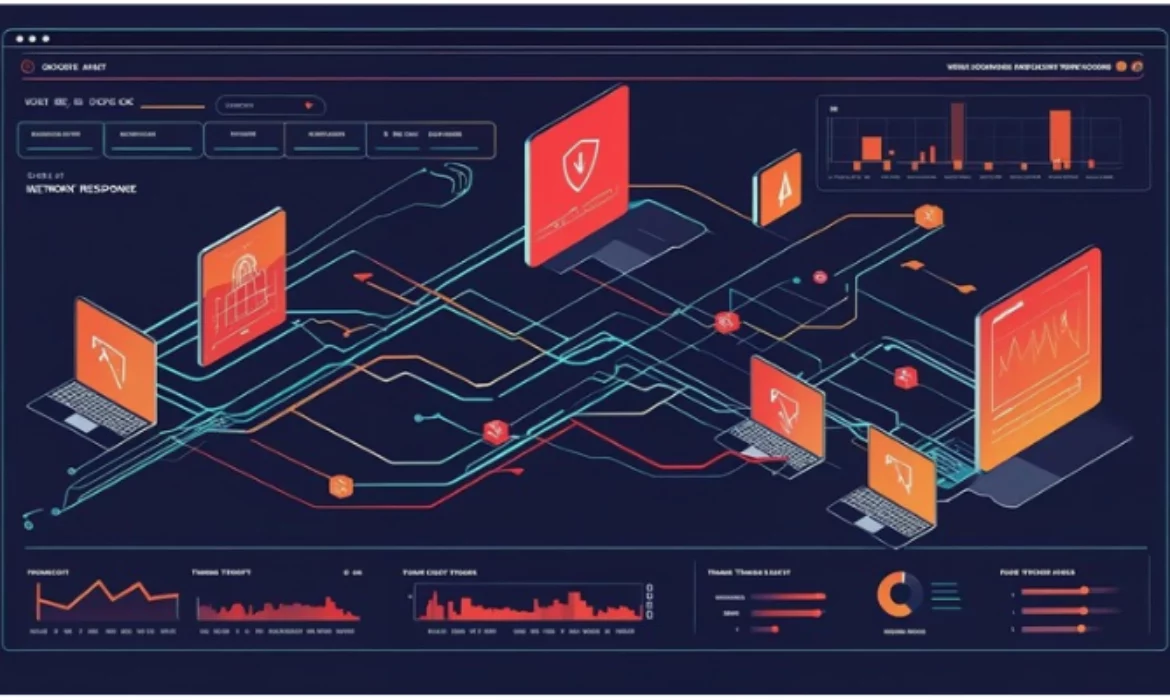
Simplified Incident Response with Rexguard
How to Manage a Security Incident
The management of a cybersecurity incident begins with the identification of anomalous activities, continues with the analysis and containment of the event, and ends with the restoration of the compromised functionalities, accompanied by the implementation of actions aimed at the continuous improvement of security.
- Timely threat detection
The organization must have tools and procedures that are always active to promptly detect any signs of compromise, such as abnormal system behavior, unauthorized access, or suspicious malfunctions. - Incident analysis and assessment
Once a potentially suspicious event is intercepted, it is essential to analyze it to determine whether it is actually a security incident. The goal is to distinguish between false alarms and real threats that require an immediate response. - Containment and management actions
In the event of incident confirmation, containment measures must be promptly implemented to limit damage and prevent the issue from spreading to other systems or services. - Operational restoration
Once the emergency phase is over, the compromised functionalities are restored, ensuring that the systems are once again operational and secure. The incident is then formally closed, accompanied by detailed documentation of the activities carried out. - Review and continuous optimization
Following the closure of the incident, it is essential to conduct a retrospective analysis to draw useful lessons. Relevant information is shared with the interested parties, procedures are updated, and personnel are made aware, in order to strengthen the organization’s resilience and prevent similar events in the future.
What is an Incident Response Plan
To manage these phases in an optimized and effective way, it is useful to have a structured incident response plan that defines roles, responsibilities, and clear procedures to follow in case of emergency.
The Incident Response Plan is a strategic and operational document that defines the methods and procedures by which an organization must address cybersecurity events. It is designed to ensure a rapid and effective reaction to threats such as hacker attacks, data leaks, or system compromises.
The ability to respond promptly to incidents plays a crucial role in limiting damage and quickly restoring operational continuity.
The main goal of incident response is to identify, manage, and resolve security events, minimizing their impact on company data and operations.
Incident Management According to the NIS 2 Directive
Increasingly strict regulations, such as the NIS2 Directive, require organizations not only to implement formal procedures and internal guidelines for the management of security incidents, but also to promptly report any breaches to the competent authorities.
Among the obligations set out by the NIS2 Directive, a key requirement is the obligation to notify security incidents to the competent authorities, by sending a preliminary alert to the CSIRT (Computer Security Incident Response Team) within 24 hours of detecting the event, followed by the official notification within 72 hours of the occurrence of the cybersecurity incident.
Security Incident Management with Rexguard
Rexguard is an advanced platform that enables centralized management of incident response, vulnerabilities, non-conformities, and audits within a single integrated system. Thanks to automated workflows, the platform allows for rapid intervention on incidents, simplifying every phase of the event lifecycle, from initial detection to formal closure.
In this way, Rexguard not only accelerates the detection and resolution of incidents, but also supports compliance with regulatory standards such as NIS2, ISO 27001, and DORA, ensuring complete traceability, detailed audit trails, and comprehensive reporting.
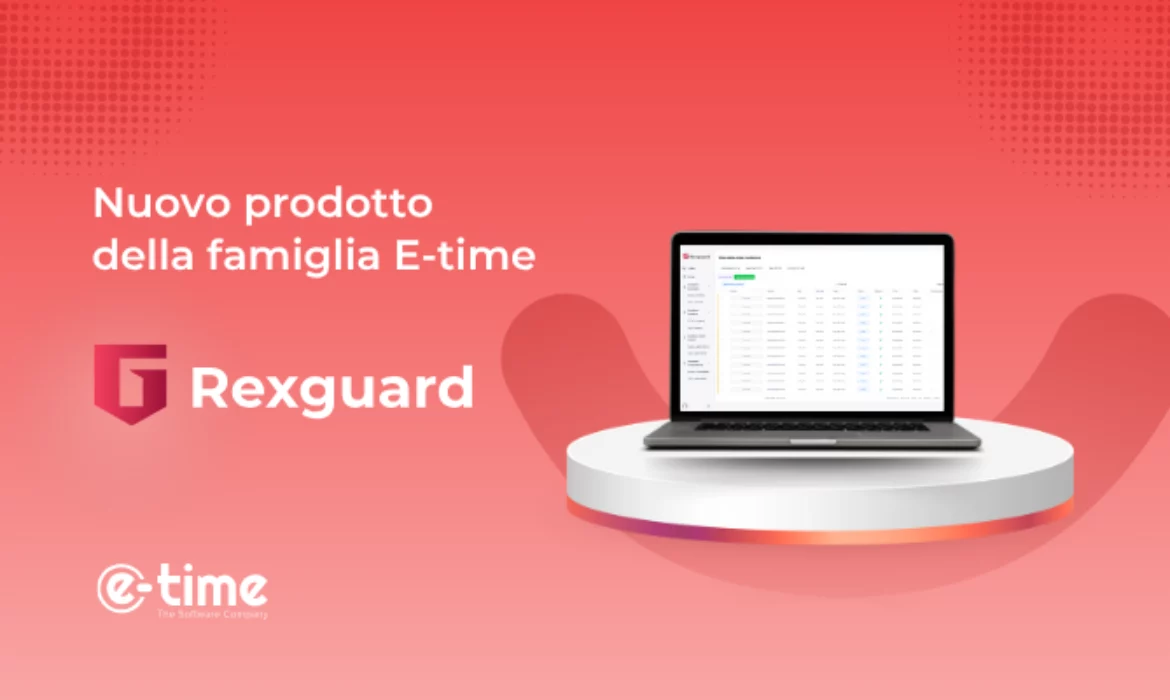
Rexguard: the new integrated platform for security and compliance management
With companies facing increasingly complex operations and strict regulations such as NIS2, DORA, and ISO27001, the ability to effectively manage incidents, vulnerabilities, and non-compliance has become essential.
With Rexguard, E-time offers a centralized platform that simplifies and automates these processes, ensuring full control and a prompt response to security challenges and regulatory compliance.
Thanks to its scalable and resilient architecture, Rexguard adapts to the needs of organizations of any size, offering high performance and ensuring operational continuity.
For more information and to discover how Rexguard can support your organization’s security, visit the official page at this link.

Rexpondo is the new ticketing system adopted by AIFA, the Italian Medicines Agency.
We are pleased to welcome AIFA (Italian Medicines Agency) on board. Starting from October 1, 2024, Rexpondo has been integrated into the agency’s digital infrastructure, becoming the primary ticketing system for managing internal and external support requests. It ensures assistance and provides useful information for resolving any user-related issues (more details in this article).
For users already registered with AIFA’s Online Services, a helpdesk service will be available, allowing them to manage their tickets. Users will be able to submit new reports or review existing ones.
The new Rexpondo Customer Portal represents a significant step forward in handling support requests for professionals working with AIFA. It offers a more intuitive and accessible platform that is continuously updated.

Why Rexpondo is the ITSM solution you’re looking for
Rexpondo is not only a ticketing system but it is an IT Service Management solution structured on standardized ITIL processes, ITIL v3 compliant, based on Open source software ((OTRS)) Community edition.
The IT department has become the key department in every company that wants to improve each element involved in the management of products and services. Managing and regualting the IT deparment is neccessary in order to create automated processes improving response times. It is precisely on process and quality automation processes that the game is played.
In fact, it is no coincidence that ITIL is a discipline focused on the quality of service perceived by customers, and Rexpondo supports the entire infrastructure, from requirements to best practices.

Core books ITIL
I “core books” of ITIL v3, are as follows:
- SERVICE STRATEGY: includes organizational goals and customer needs and describes the following processes: Strategy Generation, Service Portfolio Management, Demand Management, Financial Management
- SERVICE DESIGN: transforms the strategy of a service into a plan for the realization of business objectives and describes the following processes: Service Catalogue Management, Service Level Management, Capacity Management, Availability Management, IT Service Continuity Management, Information Security Management, Supplier Management
- SERVICE TRANSITION: develops and improves the capabilities for the introduction of new services in the supported environments and describes the following processes: Transition Planning and Support, Change Management, Service Asset and Configuration Management, Release and Deployment Management, Service Validation and Testing, Evaluation, Knowledge Management
- SERVICE OPERATION: manages services in the supported environments and describes the following processes: Event Management, Incident Management, Request Fulfillment, Problem Management, Access Management. The following functions are also defined in this book: Service Desk, Technical Management, IT Operations Management, Applications Management.
- CONTINUAL SERVICE IMPROVEMENT: Achieves incremental service and large-scale improvements. The improvement process described is unique and organized into seven steps.
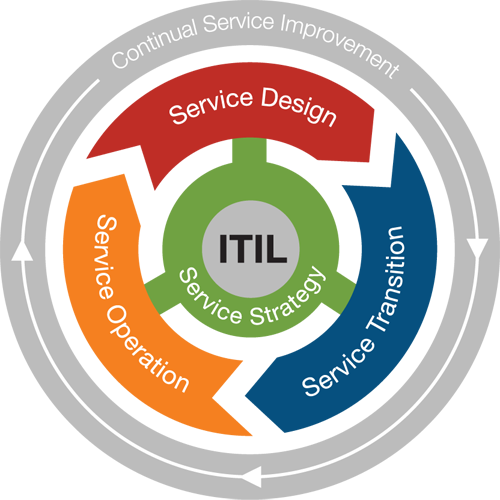
Processes supported by Rexpondo
Rexpondo is a Service Desk system and therefore by definition acts as a point of contact between users and the ITSM. Rexpondo provides an interface to other processes such as:
- Incident Management
- Problem management
- Request Fulfilment
- Service Asset and Configuration Management
- Change management
- Knowledge Management
- Service Catalogue and Service Level Management
For further information about Rexpondo, please go to: Rexpondo e ITIL.

From ((OTRS)) Community edition to Rexpondo
OTRS: Let's take stock
Following OTRS AG’s announcement to no longer support OTRS 6 and ((OTRS)) Community edition 6 and with them the related security updates, we have chosen to transform our dedicated Rexpondo area into a real product, an open source ticketing and ITSM system based on ((OTRS)) Community edition.
We have formed a partnership with the German company OTOBO, with whom we have already collaborated on the security update of the latest version of OTRS CE and we will collaborate on further developments of the platform.

The future
With the experience gained by the Rexpondo team in ticketing and ITSM, today we are able to coordinate a roadmap of implementations, with short and medium term goals.
We can guarantee continuity in the support and maintenance of the current platform (including security patches and bug fixing) for all those companies that have invested in OTRS up to now, evolving at the same time, the Rexpondo platform.
Below are the developments already implemented:
- Data protection
- Dynamic fields management
- GDPR consent on customer side
- Elastic search
- New Customer graphic interface
- Native SLA stop
- Maps integration with OpenStreetMap
and upcoming developments:
- Mobile app
- BI (Business Intelligence)
- API rest
- Chatbot integration
- Graphics overhaul